
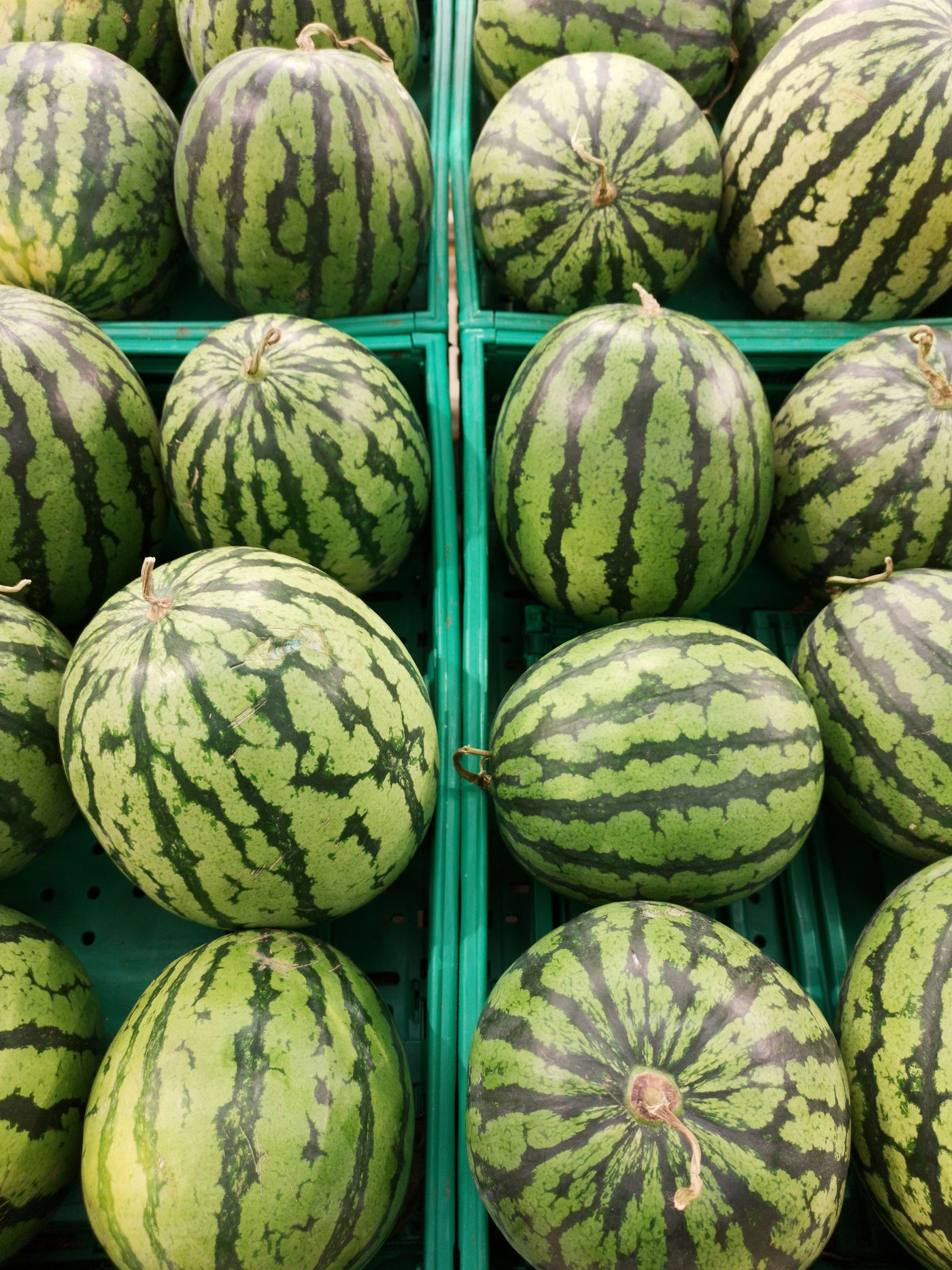
Overview
Watermelon is an African native that reached India via ancient trade and settled in permanently. The fruit belongs to summer; the seed belongs to the whole year. Across North India the shelled kernel, magaz, has been a fixture of festive cooking for centuries — thickening gravies, enriching thandai, binding sweets, and appearing in the mixed-seed packets sold at every dry-fruit shop.
The tradition is thrifty and intelligent. The kernel is what remains after the water and sugar of the fruit are gone, and what remains is dense: protein, minerals and fat, in a form that keeps for months without spoiling.
Unani and Ayurvedic texts classified magaz as cooling and strengthening, prescribing it in summer preparations and in convalescent diets. Whether or not one accepts the thermal framework, the practical instinct — that a concentrated seed is worth saving — has held up well.
Contemporary analysis places watermelon kernels among the higher-protein seeds available to Indian vegetarians, with a strong magnesium showing and a useful contribution of iron, zinc, potassium and B vitamins. They are also unusually mild in flavour, which is why they blend rather than dominate.
Health benefits of Watermelon Seeds
10 evidence-informed reasons this ingredient earns its place in a daily blend.
One of the Best Plant Proteins Available
Roughly a third of a watermelon kernel's weight is protein, with a respectable amino-acid spread including arginine and lysine.
For vegetarian households trying to reach a sensible protein target without eating dal at every meal, seeds like these do meaningful work.
Combine with roasted black chana sattu to cover an even broader amino-acid range in one spoon.
Rich in Magnesium for Muscle and Nerve Function
Magnesium regulates muscle contraction and relaxation, nerve signalling and the enzymatic production of cellular energy.
Cramping, restlessness and unexplained fatigue are all common symptoms of chronically low intake — and Indian diets are frequently on the low side.
Supports Heart Health
The unsaturated fat profile is favourable, and the arginine content matters: arginine is the precursor the body uses to produce nitric oxide, which helps blood vessels dilate.
Potassium and magnesium contribute the mineral side of healthy blood-pressure regulation.
Contributes Iron for Energy and Focus
Iron carries oxygen through the blood, and low iron shows up first as fatigue, breathlessness on stairs and poor concentration.
Plant iron is absorbed better in the presence of vitamin C, which is a practical argument for eating seeds alongside fruit.
Supports Skin Elasticity and Repair
Protein supplies the building blocks of collagen; zinc supports repair; unsaturated fat and vitamin E protect the barrier.
This is one of the more visible long-term returns on eating a mineral-dense seed daily.
Encourages Healthy Hair Growth
Hair is almost entirely protein, and hair loss is one of the earliest signs of protein or iron shortfall.
Magaz supplies both, which is likely why traditional postnatal and recovery diets leaned on it so heavily.
Aids Blood Sugar Stability
With very little fast carbohydrate and substantial protein and fat, watermelon kernels blunt the glycaemic impact of the meal they accompany.
Magnesium's role in insulin sensitivity adds a second, slower mechanism.
Supports Bone Density
Magnesium, phosphorus, copper and manganese all appear in the kernel, and all participate in bone formation and maintenance.
Calcium gets the attention; the cofactors decide how well it is used.
Provides Antioxidant Support
Vitamin E and phenolic compounds in the kernel help manage oxidative stress from pollution, poor sleep and processed food.
The benefit is cumulative and unglamorous, which is exactly how nutrition usually works.
Gentle on Digestion
Compared with heavier nuts, roasted magaz is light and easy to tolerate, which is why it appears in convalescent and children's foods.
Ground into a blend, it becomes gentler still.
What the research suggests
Educational summaries of the general direction of published evidence. Nothing here is medical advice.
Seed protein quality in vegetarian diets
Peer-reviewed analyses of plant protein sources place melon and gourd seeds high on protein density among commonly eaten seeds, and note their usefulness in complementing cereal- and pulse-based diets.
Arginine, nitric oxide and vascular function
Clinical evidence indicates that arginine is the substrate for nitric oxide production, a signalling molecule central to blood vessel dilation. Food-level intakes are studied as a supportive dietary factor rather than a therapeutic dose.
Magnesium and metabolic health
Multiple observational studies suggest an inverse relationship between magnesium intake and markers of insulin resistance, with seeds and whole grains identified as the practical dietary levers.
How FamilyFuel uses Watermelon Seeds
Watermelon kernels raise the protein of the FamilyFuel Daily Nourish Blend without adding heaviness or a dominant flavour — the two things that stop people eating a healthy mix daily.
We roast them gently to bring out the nutty note, then balance them with pumpkin seeds for zinc, sunflower seeds for vitamin E, flax seeds for omega-3 and makhana for texture.
The point of a blend is coverage. No single seed does everything; a considered combination gets much closer.